

Good morning, Armchair Army,
Welcome to today's edition of The Armchair Analyst, a 5-minute daily update on the ASX life-sciences sector.
Disclosure: Armchair Analyst Media Pty Ltd owns 1,388,888 RHT shares. RHT has also engaged Armchair Analyst for investor awareness services. Read this article with this relationship in mind.
This information is general in nature and does not constitute personal financial advice.
The story of GLP-1s dates back to the discovery of insulin.
A century of small improvements, driven by fierce competition between two Danish companies.
Novo and Nordisk.
One molecule, for 100 years.
That was Act I.
Act II is all about GLP-1s.
1 in 8 American adults are taking them.
Sales are set to eclipse US$85 billion this year.
(And who knows, it could be more… Eli Lilly reports Q3 numbers tomorrow night.)
The same competitive ethos that drove insulin innovation is driving GLP-1s.
… but now with many more players in the game.
951 GLP-1 clinical trials right now are all trying to work out…
How much fat did you lose?
Where did it come from: under the skin, or around your organs?
How much muscle did you keep?
And what happened to the fat and scarring in your liver?
THIS is the next frontier for the metabolic disease arms race.
… and my fourth Armchair Pick for measuring it all: Resonance Health (ASX: RHT).

A growing, profitable and operating-cash-flow-positive business.
With the ambition to bring all of those measurements into one MRI scan.
Today at 1:00 pm AEST, Resonance’s CEO will present the story:
But to understand where the GLP-1 arms race is going, we need to go back to where it started.
Toronto, Canada.
1921.
This is the history of GLP-1s.
But first…
The Pulse Check
Two days of “The Pulse Check” .
Resonance Health (ASX: RHT) publishes proof-of-concept data on its FibrosisAssessment MRI technology, in line with the widely used FibroScan. Raises $6M in an oversubscribed placement. (RHT, Armchair Pick, held)
🪑 💪
Alcidion Group (ASX: ALC) announces a share buy-back program for up to 10% of issued capital (~135 million shares). (ALC, held)
🪑 I like this. I bought some stock yesterday.
Enlitic, Inc. (ASX: ENL) signs a three-year US$144,000 contract with Southwest Medical Imaging in Arizona for its Ensight technology. (ENL)
🪑 Deal momentum starting to roll.
Arovella Therapeutics (ASX: ALA) doses the first patient in its Phase 1 trial of ALA-101, an 'off-the-shelf' cell therapy for blood cancers. (ALA)
🪑 Good luck!
The initial trial will focus on “dose escalation” (starting with a small dose and increasing from there), so any efficacy at this early stage should be seen as very positive.
PainChek (ASX: PCK) secures a contract with Hallmark Luxury Care Homes for 1,800 additional licences, expanding its UK footprint to 23 homes. (PCK)
🪑 Nice deal.
Clarity Pharmaceuticals (ASX: CU6) achieves target enrollment of 383 participants in its Phase III CLARIFY trial. Results expected in H1 2027. (CU6)
🪑 CU6 saw a big sell-off, in line with broader healthcare weakness.
Two big catalysts to watch next year. One that could bounce back quickly if sector sentiment changes.
I’m watching closely.
Argent BioPharma (ASX: RGT) has entered a 10-year licensing agreement with Thai Phytomed to globally commercialise four of its cannabis products. (RGT)
🪑 Continues to offload legacy products.
TALi Digital Limited (ASX: TD1) appoints William Hamilton as CEO and Managing Director. (TD1)
🪑 Good luck!
Noxopharm Limited (ASX: NOX) requests a trading halt pending a material capital raise. (NOX)
REPORT: Jim Chalmers publishes revised CGT rules for startups, but R&D funding concerns remain. (Smart Company)
🪑 I did a quick scan of the legislation yesterday, and my initial read is that these changes are woefully inadequate.
No extension to the 15-year cap on R&D companies.
No carve-outs for ASX-listed companies for CGT changes.
No changes really from the original draft last month.
Much more work to do…
(I’ll have a fuller take later on)
The Report Card
A bunch of 4Cs came out today and yesterday… I’ll highlight the important ones I’ve paid attention to.
Clever Culture Systems (ASX: CC5) reported three sales and invoicing of APAS® units in Q1 FY27, forecasting eight unit sales and evaluations in H1 FY27. (CC5)
🪑 Long sales cycles, but there is momentum now.
Nova Eye Medical (ASX: EYE) reports Q1 FY27 sales of US$6.3M, up 30% from PCP, with positive EBITDA and cash flow. FY27 sales and EBITDA guidance confirmed. (EYE)
🪑 EYE’s first-quarter operating cash flow positive.
It's been a monumental effort to resist the temptation to raise capital and stick to the strategy.
Nice work. Good quarter.
Oneview Healthcare (ASX: ONE) signs six new customers, including initial deployments for Bedside Hub TV. Cash balance negatively impacted by payment timing. (ONE)
🪑 It would be scary if you scrolled down and saw only €594,000 in cash receipts for the quarter.
BUT, as the notes mention, this was a timing issue. With a payment due in the quarter hitting the bank account on October 19th (of €2M).
Always read the notes!
Immuron (ASX: IMC) reports Q1 sales of A$2.2M, up 9% year-on-year. (IMC)
Botanix Pharmaceuticals (ASX: BOT) reports Sofdra prescriptions up 5.3% and net revenue steady at $10.1 million. (BOT)
🪑 Directionally, the numbers are heading the right way, but it’s still such a big cash burn of ~$10 million a quarter to make up.
Lumos Diagnostics (ASX: LDX) Q1 FY27 revenue of $2M, with FebriDx® expansion to 265 U.S. healthcare sites. (LDX)
🪑 Cash receipts WAY down compared to previous quarters. Last quarter, the CLIA waiver milestone payment of US$5 million padded those numbers, but the market didn’t like this one.
For what it’s worth, I don't think the quarter was that bad.

So… the history of GLP-1s.
Where to begin?
Let’s go ALLLLL the way back to the very beginning.
The story of insulin.
1921, Toronto, Canada.
Type 1 diabetes was rampant.
A chronic autoimmune condition where the body's immune system destroys the insulin-producing cells in the pancreas.
The prescribed standard of care at the time (I kid you not) was the “starvation diet”.
Literally, starve… and wait for science to find a solution.
Eventually, it did.
Physicians at the University of Toronto extracted a substance from dog pancreases, and this worked as a treatment.
… for about 1 hour.
Then you needed more… and more… and more.
Still a giant breakthrough.
It made the front cover of the Toronto Daily in 1922:

… and yes, they did with the Nobel Prize.
But discovering insulin and manufacturing enough of it were different challenges.
The University couldn’t keep up with demand OR scale production.
So they licensed it out to a small drug company in Indiana.
Eli Lilly.
(Yep, they were there from the beginning)
Eli Lilly sales reps went door to door to slaughterhouses and asked for discarded pancreases.
10,000 pounds of pig pancreatic glands would yield 1 pound of insulin.

Still, Eli Lilly could make enough insulin for the entire world.
Meanwhile… in Copenhagen in the 1920s
Marie Krogh, a physician in Denmark, had been diagnosed with Type 1 diabetes.
A starvation diet was her prescribed treatment.
She travelled to Boston, where she heard about these men in Toronto who had found the cure for diabetes.
She got the European licence from the University of Toronto and returned home with a potential treatment.
Back in Copenhagen, Marie's physician Hagedorn tested the theory.
They bought cow pancreases at the local livestock market, ran them through a meat grinder, poured hydrochloric acid over the mince and tested the result on rabbits.
It worked.
In March 1923, they treated the first Danish patients and founded Nordisk.
Several months later, Nordisk’s factory operator quit.
He moved down the street and started Novo.
Two Danish insulin companies, a few blocks apart…
Hating each other for 65 years.
The competition was on.
Novo couldn't just copy Nordisk.
Nobody would buy knock-off insulin from two sacked engineers while a Nobel laureate's company sat down the road.
At its core, insulin production was an industrial process.
So Novo built its edge through engineering.

Nordisk sold insulin as tablets that you dissolved and drew into a syringe yourself.
SO… Novo introduced shelf-stable liquid insulin.
It sold it at half the price.
Nordisk hit back with NPH in 1946.
Hagedorn worked out that adding protamine slowed absorption and prolonged the effect, so patients needed fewer injections.
Nordisk licensed NPH to Lilly and anyone else who asked.
Except Novo.

The companies went back and forth, competing vigorously over one molecule for 65 years until they eventually merged in 1989.
Nordisk - 1923: Launches Insulin in Scandinavia.
Novo - 1925: Markets stable insulin to make self-injection and accurate dosing easier (and cheaper)
Nordisk - 1936: Launches a longer-acting protamine insulin.
Novo - 1938: Markets zinc-protamine insulin, adopting another longer-acting formulation.
Nordisk - 1946: Develops crystalline NPH insulin, which can be mixed with short-acting insulin without changing the components’ properties.
Novo - 1973: Creates the purest insulin available at the time.
Nordisk - 1974: Introduces its own highly purified porcine insulin and stops producing bovine insulin.
Novo - 1982: Cracks “human insulin”.
Nordisk - 1983: Introduces the insulin pump.
Novo - 1985: Launches the first commercially available insulin pen.
The merger year - 1989: Novo and Nordisk combine to create an insulin powerhouse
Over those 65 years, competitive tension drove innovation.
Same product.
Small iterations.
Better, every time, bit by bit.
In the States, Eli Lilly became a diversified drug company.
Penicillin, vaccines, cancer treatments, antidepressants.
They made ONE breakthrough in 1982: genetically engineered insulin from bacteria.
… but largely they were technology followers.
They let competitive tension in Europe drive innovation and licensed whatever technology was best and most up to date.
Novo and Nordisk merged in 1989.
… and still to this day is predominantly an insulin company.
Until GLP-1s.
The origins of GLP-1s
GLP-1 is a gut hormone that tells your pancreas to release insulin and tells your brain you’re full.
(The double whammy)
It was discovered in the 1980s…
But the catch was that it lasted only about 2 minutes in the body.
Eventually, Novo scientist Lotte Knudsen solved the problem by attaching a fatty acid to the peptide so it would bind to the most abundant protein in blood.
Essentially, GLP-1 hitched a ride to the pancreas instead of being filtered out by the kidneys.
The half-life went from 2 minutes to 13 hours.
Liraglutide became Victoza and received FDA approval in January 2010.
It did roughly $300 million in year one and over a billion in 2011.
Still, there were limitations.
It was a daily injection.
… and when Novo finally got a higher-dose weight-loss version approved as Saxenda in 2014, the pivotal trial showed an average weight loss of 8% against 2.6% in the placebo group at 56 weeks.
Novo wasn’t quite there yet… but they were heading in the right direction.
The Novo team screened about 4,000 peptides to find one that could last the longest.
The goal?
Turn daily injections → weekly injections.
They finally landed on semaglutide.
Ozempic (the commercial name) was approved for Type 2 diabetes in December 2017.
It did over US$1 billion in 2019.
In February 2021, the New England Journal of Medicine published the results of a weight-loss trial for semaglutide.
Once-weekly semaglutide 2.4 mg produced an average weight loss of 14.9% at 68 weeks, compared with 2.4% on placebo, in adults with overweight or obesity who did not have diabetes, with lifestyle support in both groups.
Half of the semaglutide group lost at least 15% of their body weight.
Wegovy was approved for weight management in June 2021.
That’s when things got a bit wild.

GLP-1s take the world by storm
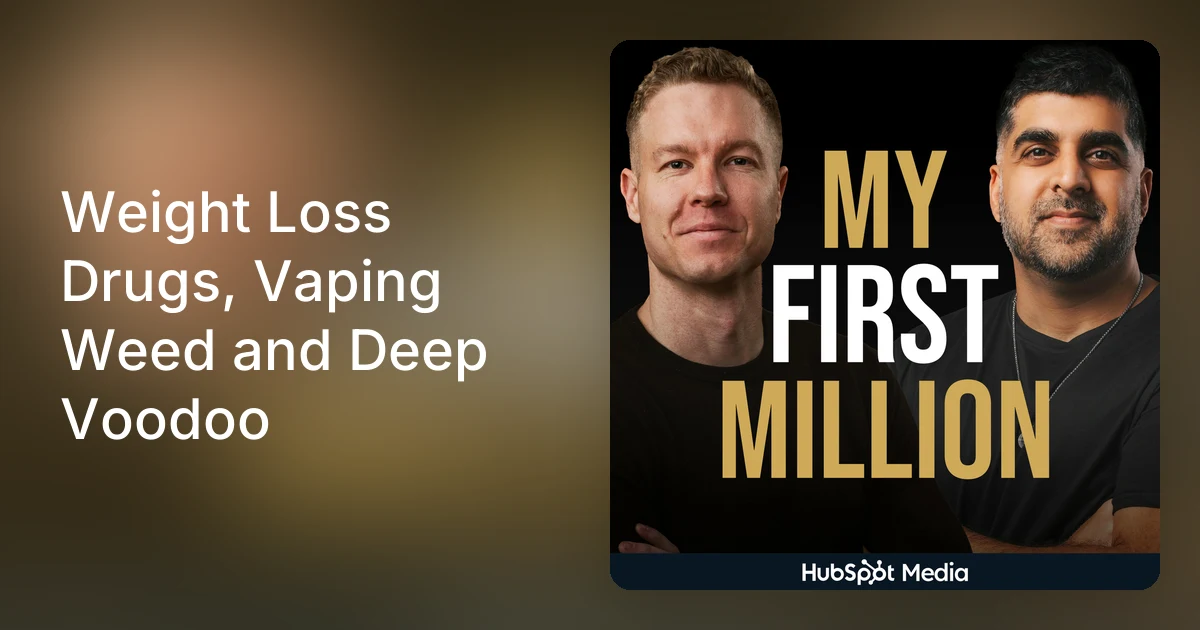
I first heard about GLP-1s in a January 2023 episode of the My First Million podcast.
A weight loss drug.
That was originally a treatment for Type 2 diabetes
… that all the celebrities were using?
It sounded like chaos.
And it was.
The FDA added Wegovy to its drug shortage list in March 2022.
Ozempic followed in August 2022.
Diabetics couldn’t get their medication.
Compounded versions offered another route, while illegal online sellers were also selling unapproved products.
People were doing ANYTHING to get their hands on it.
It was crazy.

(Source: NBC - 2023)
Novo passed LVMH to become Europe's most valuable company in 2023…
(come down a bit since then)

Then Eli Lilly became the first $1 trillion healthcare company.
(and actually managed to sustain their run)

All off the back of GLP-1s.
… then the M&A happened.
Pfizer and Novo Nordisk ended up in a bidding war over Metsera, with Pfizer completing the acquisition in November last year for up to US$10 billion.

(Source: Reuters)
I remember this crystal clear because it was one of the first “stories” I wrote about when I started the Armchair Analyst newsletter in November last year.
Within a space of four weeks…
Pfizer acquired Metsera for US$10 billion.
Roche licensed an asset from 89bio for US$2.4 billion (and US$3.5 billion in milestones).
Novo Nordisk licensed an asset from Akero for US$4.7 billion.
Suddenly, it felt like EVERYONE needed a GLP-1 asset in their development pipeline.
The prize was just too big.
And the great arms race was well underway.
Where are we at today with GLP-1?
So far, that’s the story…
Today, the next generation includes drugs like Eli Lilly’s Retatrutide, which targets THREE hormone receptors (not just GLP-1).
In its Phase 3 TRIUMPH-1 trial, Lilly reported an average weight loss of 28.3% at 80 weeks.
That’s a big step change.
Topline weight loss still matters.
So do safety, side effects and whether people can stay on treatment.
But the next question is about the QUALITY of that weight loss.
How much fat did you lose?
Where did it come from: under the skin, or around your organs?
How much muscle did you keep?
And what happened to the fat and scarring in your liver?
Enter Resonance Health (ASX: RHT) with its MRI imaging software to answer these questions.
My fourth Armchair Pick.
The dream?
One MRI scan → A bunch of metabolic, muscle and iron biomarkers.
Some of this is already offered; others are under development.

Because you can’t improve what you can’t measure.
That’s RHT’s role.
“Measure.”
Own the sites.
Run the trials.
Own the tech that measures the results.

The business is growing: group revenue is A$15.8 million in FY26, and guidance is set for A$17M-$22M next year.

Resonance won't develop the next Ozempic.
BUT…
It could provide the analysis to identify the NEXT GLP-1 blockbuster.
The story of insulin is a century of small improvements, driven by rigorous competition and a prize worth chasing.
GLP-1s are the next act.
… and Resonance Health (ASX: RHT) is right in the middle of it all.
See you all next week,
The Armchair Analyst
PS. If you liked the article, I’d highly recommend listening to the history of Novo Nordisk by Acquired:
What is an armchair pick?
An Armchair Pick is an invite-only spot I reserve for my highest-conviction investment ideas.
It's a paid arrangement, but to align myself, I only take my fee in shares - half escrowed for 6 months, half for 12.
It is general commentary only, not personal financial advice or a recommendation to buy, sell, or hold. Always see the disclosure at the top of the article and do your own research.


