Good morning,
Welcome to today's edition of The Armchair Analyst, a 5-minute daily update on the ASX life-sciences sector.
Ever heard of an ASX-listed stock where if you sell shares, there is no Capital Gains Tax?
(I bet you’re paying attention now)
Still listed from 1998, this is one of the last remaining Pooled Development Funds.
A type of company that can take on no debt but has no Capital Gains Tax on the sale of its shares.
In the early 2010s, this company had it all.
A 9-figure deal with Eli Lilly.
A product in a massive health trend.
An ad in the Super Bowl.
But 15 years later, this company is just surviving.
Just like that catchy song from the 80s, “Running Up That Hill”...
Netflix’s Stranger Things revived the career of Kate Bush.
The next company in my Biotech 165 Challenge: Acrux (ASX: ACR) is looking to do the same.
Revive a drug from 15 years ago.

So, can this $6 million capped Pooled Developed Fund do a “Kate Bush” in Stranger Things… and turn an old blockbuster into a modern hit?
Or will it just be another forgotten asset, lost to the sands of time…
It's 1985.
Kate Bush just released a hit song, "Running Up That Hill".
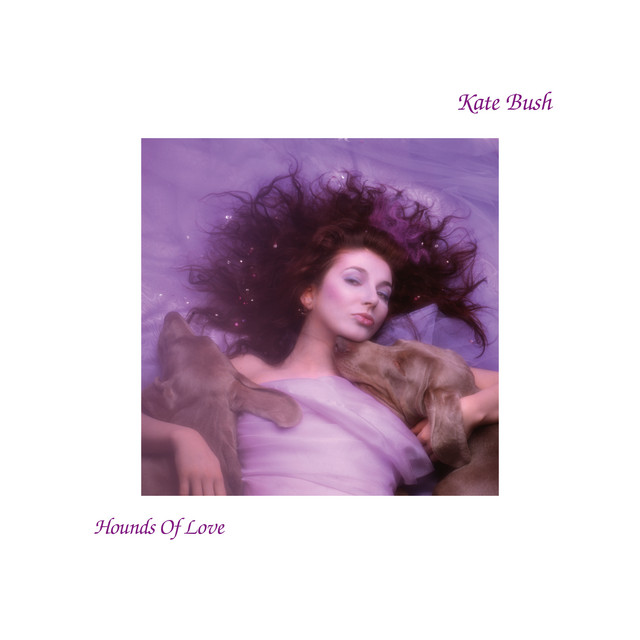
Massive in the UK.
And then... the years go by.
Kate Bush retreats from public life. The song fades into the canon.
Admired by critics, forgotten by the casual listener. Lost to history.
Until 2022.
A Netflix show called Stranger Things drops its season finale, which features the song “Running Up That Hill” in a critical scene.

Within weeks, "Running Up That Hill" hits #1.
Again.
37 years after release.
Kate Bush is suddenly the biggest artist on the planet. Age 63.
It is rare for something that returns from obscurity to have such a profound cultural impact.
THAT is the kind of magic one tiny ASX-listed minnow is looking to manifest.
Nearly 15 years ago, Acrux (ASX: ACR) was a darling of the ASX.
Fresh off the back of a multi-million dollar deal with Eli Lilly.
Ads in the Super Bowl.
A product in one of the hottest healthcare trends of the time (testosterone)...
Now Acrux is a $6M micro-cap reinvigorated by a regulatory change that was 15 years in the making.
An asset that sat on the shelf for that long… now suddenly interesting.
Could this stock do a “Kate Bush”?
Let’s find out…
What’s the story?
In 1998, Acrux (ASX: ACR) was spun out of Monash University as a Pooled Development Fund.
Remember this, it will be important later.
The pitch back then was simple.
Most drugs get absorbed through the gut and chewed up by the liver. What if you could deliver a precise, metered dose through the skin?
The technology had three components:
A metered-dose applicator,
A proprietary penetration enhancer (a sunscreen ester that helps drugs cross skin), and
The "Patchless Patch" an invisible reservoir that forms inside the skin itself.
That platform produced three approved hormone products in the 2000s.
Evamist (estradiol spray, FDA-approved 2007).
Lenzetto (estradiol spray, EU).
And the big one, Axiron, a topical testosterone solution sprayed into the underarm.
In March 2010, Acrux signed what was, at the time, one of the largest licensing deals in Australian biotech.
Eli Lilly took global rights to Axiron for up to US$335 million in milestone payments.
US$50 million upfront, US$87 million on FDA approval, and roughly US$195 million in sales-based milestones.
Here is the retro Bioshares coverage of the announcement:

(Source, Bioshares)
Eight months after the deal was signed, the FDA approved Axiron.
First testosterone replacement therapy ever applied to the armpit, like deodorant.
Then Axiron rode straight into the middle of one of the most aggressive direct-to-consumer marketing booms in pharma history.
The Low T era.
Eli Lilly pumped an estimated US$500 million into the commercialisation of its testosterone products.
They even ran an ad at the Super Bowl:
Far out, those disclaimers are annoying…
The early 2010s were the absolute peak for Acrux… until it all came tumbling down.
The Fall: Acrux Decline
Two things broke the back of Acrux’s story
FIRST: The FDA
In January 2014, the FDA announced an investigation into the cardiovascular safety of testosterone replacement therapy.
Overnight, the "Low T" gold rush turned into a litigation gold rush.
Lilly was named in more than 400 federal lawsuits and ultimately settled in 2018.
SECOND: The Patent Cliff
In March 2017, a generic version of Axiron received FDA approval.
Sales fell off a cliff.
Six months later, Lilly and Acrux mutually terminated the licensing agreement.
While the drug DID revert to Acrux, Acrux could never recapture the magic without Lilly’s sales force and the drug’s patent protection.
The Pivot
For the next 8 years, Acrux tried to build a US topical generics business.
Licensing real products to real US distribution partners… but never reaching profitability.
In January 2023, Acrux sold its remaining future royalties to Gedeon Richter for €4.1 million. Monetising the last meaningful piece of the original platform… just to keep the lights on.
By March 2025, the share price was 3 cents.
By May 2026, it was 1.2 cents.
Market cap: roughly A$6 million.
Shell valuation.

The company just completed a $1.6 million capital raise at the lowest price it has ever traded, $0.0095.
(I participated in this one for a small amount)
Digging through the archives to find a hidden gem
Here's where it gets interesting.
While Acrux was developing its male testosterone product, it was running, in parallel, a female testosterone program using the exact same MDTS spray, just dosed for women.
The indication is Hypoactive Sexual Desire Disorder (HSDD).
(Essentially female libido)
The program completed a Phase 2 study in 261 premenopausal women.
In 2006.
The middle dose hit the primary endpoint, statistically significant improvement in satisfying sexual events vs placebo.
No clinically relevant adverse events.
Around the time the study was conducted, there were some safety concerns about hormone treatment for women.
In particular, the Women's Health Initiative study that was halted in 2002, linking combined hormone therapy to an increase in breast cancer, heart attacks and stroke.
The downstream effect was that the FDA started demanding multi-year cardiovascular safety studies for any hormone going into women.
The economics of developing female hormone products fell apart.
Acrux licensed its female testosterone product to Vivus, but the relationship soured when Vivus dragged its feet on starting a Phase 3 trial.
Acrux took Vivus to formal arbitration, and the judge set a hard deadline for the trial to begin.
The day before, Vivus handed back the rights to Acrux.
Here is what the CEO of Vivus (the licensor) said at the time:
The decision to terminate the agreement was made in view of the “significant long-term safety requirements for the approval of testosterone products in women,"
So it wasn’t that the drug didn’t work, but rather that the regulatory pathway was untenable.
Now that has all changed.
In November last year, the FDA removed the black box warnings on menopausal hormone treatment at the direction of HHS.

What's been shown is that in women under 60 or within 10 years of menopause, hormone therapy is actually a lot safer.
In many cases, hormone therapy is now recommended as first-line treatment by The Menopause Society for vasomotor symptoms (hot flashes, night sweats, sleep disturbance).
About 2 million American women are already using testosterone off-label for HSDD.
But it's through buying compounded products made from men's testosterone products. Not ideal.
So this black-box lifting was Acrux’s “Stranger Things” moment.
All of a sudden, its long-forgotten product was viable again.
Those "long-term safety requirements" that Vivus walked away from? Evaporated.
The wider interest from pharma partners? Returned.
The potential market for female testosterone products. Always there.
Now Acrux had a Phase 3-ready asset, with a clear pathway to market.
Here is the market size by the numbers…
Roughly 60 million women in the US are affected by menopause.
Of those, an estimated 4.9 million suffer from clinically diagnosed HSDD.
HSDD impacts approximately 10% of all adult women globally.
By 2030, around 130,000 women globally will enter menopause every single day.
The demand for this product is there…
All Acrux needs to do now is find a partner willing to fund the Phase 3 trial.

A quick word on Acrux structure
Acrux is like a relic from the past.
One of the last surviving Pooled Development Funds listed on the ASX.

(Source, Business.gov)
The PDF regime was created by the Hawke-Keating government in 1992 to incentivise venture investment into Australian businesses.
The benefit of a PDF is that any capital gains on disposal of those shares are completely tax-free for Australian-resident shareholders.
Yep, that’s right.
No Capital Gains tax on Acrux shares.
This structure just became a whole lot more interesting now that the CGT discount is about to be abolished.
Thanks, Jim…
The Armchair Take
Now, Acrux just completed a capital raise of $0.095 for $1.6 million. I decided to participate.
However, the bet is not without risk.
A Phase 3 clinical trial is not cheap.
It will have to take on dilution either through a licencing deal (the upside in the asset) OR through the markets (raising capital in the traditional way).
I’m not too interested in its marginal generics business; I’m here for the Phase 3.
The longer it takes to find a financing partner, the longer the share price will drift.
BUT at a $6 million market cap, the risk-reward profile gets interesting.
Kate Bush didn't write a new song in 2022.
It was Netflix that plucked “Running Up That Hill” from obscurity and brought it back into mainstream consciousness.
Acrux didn’t invent a new drug.
But it was the FDA that lifted the regulatory burden on female hormone therapies.
Will Acrux to “do a Kate Bush” and release another megahit from its back catalogue?
Who knows, I’m just the Armchair Analyst.
Big thank you to Acrux CEO John Warmbrunn for sharing the Acrux story with me.
See you all tomorrow,
The Armchair Analyst
But First…
The Pulse Check
No newsletter yesterday. I was on-site in Brisbane doing some due diligence on a potential new stock pick. Double duty today.
Yesterday, Forbes posted a profile on my first-ever Armchair Pick Tetratherix (ASX: TTX). 100% worth the read.

(Source, Forbes)
🪑 Something that stood out to me in the feature was that TTX is “looking to become the next Cochlear”. Something that the CEO Will repeated to me when we went for lunch last Friday.
TTX had the opportunity to list in the US, but chose Australia because of the opportunity to become one of the great Australian medtech companies (like a Cohclear).
It’s a grand ambition, and I like it.
Yesterday, Bioxyne (ASX: BXN) secured a two-year, $50M supply agreement with ADREXpharma in Germany. (BXN)
🪑 This was a genuinely monster deal. Well done to the Bioxyne team.
Enlitic (ASX: ENL) platform has gone live at New Zealand's largest private radiology provider. (ENL)
Nexsen Limited (ASX: NXN) secures a strategic collaboration with GHK Hospital in Hong Kong for a six-month clinical validation program to collect real-world data on NXN’s rapid point-of-care test for GBS. (NXN)
Neurizon Therapeutics (ASX: NUZ) receives ethics approval for Phase 1 study of NUZ-001 oral liquid formulation aimed at improving ALS treatment. (NUZ)
EBR Systems (ASX: EBR) secures a purchasing agreement with HCA Healthcare, enabling streamlined access and commercialisation of its WiSE CRT System. (EBR)
🪑 The market didn’t love the quarterly report yesterday. This deal might spark some joy back into the stock.
Report: A new model for treating ultra-rare N of 1 genetic diseases. (Healthy Innovations)
🪑 I loved this article. Very, very interesting.
Cash Injection
Acrux (ASX: ACR) raises $1.6M through a share placement at 0.95 cents per share. (ACR)
🪑 I participated.
Avecho Biotechnology (ASX: AVE) raises $1.9M through exercised options, boosting its cash balance to $6.3M ahead of Phase III interim results. (AVE)
Pacific Edge (ASX: PEB) completes NZ$25.4M equity placement. (PEB)
M&A, Big Pharma Wants a Wife
Bristol Myers Squibb and Chinese company Hengrui Pharma announced a 13-program global strategic collaboration in oncology, hematology, and immunology, with US$600M in upfront payments and up to ~US$15.2B in milestone payments. (FierceBiotech)
🪑 That is an eyewatering M&A deal coming out of China.